The monarchies of today share five queen consorts between them with the remaining crowns of modern Europe being worn by queen regnants with long serving princes, one officially called a consort, at their sides.
A century ago, the split was six to one in favour of the female consorts. Three of the consorts were British, four were German. And all of them had a far more important and influential role in the way their royal houses developed and grew, at a crucial time of social change, than history has given them credit for.
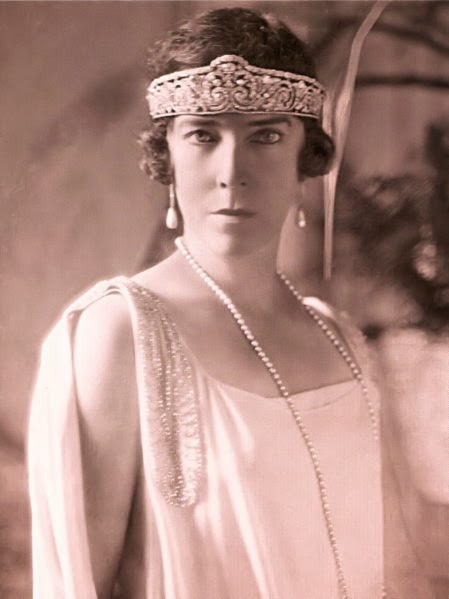
Elisabeth, Queen of the Belgians, in a typical pose for consorts in the early part of the 20th century. They were usually shown with their families, focusing attention on their role as wife and mother, but their influence was far greater.
Of all the queens of 1914, perhaps Ena of Spain kept most closely to the traditional perception of a consort. Victoria Eugenie Julia Ena was born in Scotland in 1887, the youngest granddaughter of Queen Victoria and one of five of her grandchildren to become a consort. She had married Alfonso XIII, King of Spain, in 1906 when she was 19 years old and while her reign started and ended with drama, most of it followed the pattern of a typical queen consort's destiny.
Victoria Eugenie, Queen of Spain, in 1922
Within an hour of her wedding, Ena had survived an assassination attempt when a bomb was thrown at the newlyweds' carriage as they made their way to the Royal Palace in Madrid for their reception. In 1931, her time as queen consort came to an end when she was forced to flee into exile with her husband and their children after the establishment of the Second Republic. The 25 years in between, however, were mostly filled with child bearing and rearing. By the end of 1914, Alfonso and Ena had a family of four sons and two daughters. Their fourth child, Fernando, had been stillborn. King Alfonso is said to have resented his wife for being a carrier of haemophilia which was passed on to their first and last sons. The couple lived largely separate lives and Queen Ena focused on work with charities helping poorer people as well as hospitals and campaigns to improve education for all. Her role in shaping the family side of the Spanish monarchy was already evident in 1914 though and was much needed - Alfonso had acceded on the day of his birth and the image of the royals had been royal rather than family from that moment.

Queen Ena of Spain only returned to the country once after her exile in 1931 when she stood as godmother to Felipe, son of Juan Carlos and Sofia, after his birth in 1968
In contrast, another of Queen Victoria's granddaughters who was a European queen consort in 1914 had a far more radical and modern role as monarch of her country. That's perhaps down to the way that Maud became a queen. Unexpected and unlooked for, her route to queenship was the most modern and unusual of all the women who wore a consort's crown a century ago.
Queen Maud of Norway with her husband and son in a photograph early on in their life as the new Norwegian royal family
Maud Charlotte Mary Victoria was the youngest daughter of Albert Edward, Prince of Wales - later Edward VII. Born in London in 1869 she married the second son of the heir to the Danish throne when she was 26 and settled down to life on the Sandringham Estate in Norfolk while her husband, Carl, continued his naval career. Until she was 35 there was little sign of a crown in Maud's life. And then the country's parliament asked her husband to be king of Norway.
Maud of Wales became a Princess of Denmark and then Queen of Norway after marrying a naval officer with no hope of a crown in 1896.
The decision of Christian Frederik Carl George Valdemar Axel of Denmark to become Haakon VII of Norway, after the proposal was approved by a referendum in the country, led to a huge change in his wife's life that she didn't necessarily relish but which she embraced wholeheartedly. By 1914, Maud of Wales had been Queen of Norway for nine years and was already a popular figure in her adopted country. Her only son, now known as Olav, was eleven years old and the king, queen and heir were often seen publicly supporting typical Norwegian activities, like skiing. But Maud liked the slightly less traditional as well. Around a year after becoming queen, she lent her support to work to help unmarried mothers set up by feminist Katti Anker Moller and promoted charities concerned with children and animal welfare. Then there was her enthusiasm for newer technologies, like photography, and her reputation for designing furniture. While Maud's royal blood helped the Norwegian parliament choose her husband as the country's new king, the consort's enthusiastic participation in the country's sporting and cultural life helped cement the new monarchy. The queen of Norway in 1914 was working endlessly to make the new royal family work. And succeeding.

The coronation photograph of King Haakon VII and Queen Maud of Norway - a year before it was taken they had no idea they would end up ruling a new monarchy
And making the image of a royal family work was also the task facing the Queen of the Belgians in 1914. But the reputation of her adopted family needed a lot of help - her king, Albert I, had succeeded a grandfather, Leopold II, who had seen scandal and allegations of cruelty attached to his name. Elisabeth Gabriele Valerie Marie was only the third queen consort of this still new Belgian monarchy but, thanks to her, it found a stability and popularity that were just beginning to take root in 1914.
Queen Elisabeth of the Belgians helped make her adopted country's monarchy into one of the most popular royal families in Europe
She had been born in Bavaria in 1876 and named after that most romantic of 19th century royals, the Empress Elisabeth of Austria, known to her namesake as aunt Sisi. At the age of 24 she married the heir to the throne of the Belgians and their three children were born in the following six years. Elisabeth's great advantage as a queen consort in 1914 was her experience of ordinary life. At a time of great social change across Europe, the Belgian queen had knowledge of what working life was like thanks to her father's career in medicine. And thanks to Elisabeth's time spent helping her father in his work, she also had a better understanding of the problems of getting good healthcare that faced many.
Elisabeth with her only daughter, Marie-Jose, briefly Queen of Italy
Elisabeth and her family's great triumph began in 1914 as World War One dawned. During the Great War, they lived a life so wound up in the war that they became symbols of their country's fight. In the Second World War, the now dowager queen helped with the evacuation of Jewish children from her country. But that was all still to come a century ago. In the years until 1914, Elisabeth had already displayed a great interest in helping poorer people in her adopted country and in establishing better health care. Her love of the arts was also already obvious. Elisabeth's work in changing her country's monarchy was only just beginning in 1914 but the seeds of a successful queenship had already been sewn.
Elisabeth of the Belgians as a young woman - she would become one of the most popular consorts in the country's history and has given her name to the future queen regnant of the country, the present Duchess of Brabant
An understanding of life outside palace walls also helped the consort of Great Britain to successfully change her dynasty's image and secure foundations for her throne that would be tested far sooner than she could ever have imagined. Mary, consort of George V, began 1914 as a queen and empress but ended it as a woman determined to lead her family in supporting the war effort in a country just starting on the path of a conflict that would change it forever.

Mary, queen consort of Great Britain, photographed in 1914
By 1914, Victoria Mary Augusta Louise Olga Pauline Claudine Agnes of Teck had been queen consort of Great Britain for four years. Despite her German title, she had been born in London in 1867 and brought up in Britain before being hand picked as future queen consort by the great queen regnant herself, Victoria. When her first fiance, Albert Victor, died Mary famously spent some time deciding whether she could marry the new heir in waiting, the future George V, and became his wife in 1893 when she was 26 years old. By 1914, her destiny as queen had found her and Mary was the consort of her country with five sons and a daughter in her royal nursery. She had completed a successful tour of India, the country of which she was empress, and was supporting her husband in his role as king. But that devotion to duty shown when she moved seamlessly from prospective wife of one future king to another was about to turn Mary into a royal powerhouse.

Another portrait of Mary of Teck as Queen of England in 1914
Mary and her husband inherited a monarchy that was old fashioned and fashioned by the old. Victoria's shadow, in her familiar mourning garb, continued to loom large over the British royals thirteen years after her death and the short reign of her eldest son as Edward VII had only served as a last hurrah for the soon to be lost world of aristocratic supremacy. Mary and George were the heads of a dusty institution that might claim to rule half the world but came from a world that few understood.
George V and Queen Mary in one of their typical serious faced poses
In 1914, all that began to change and the revolution was driven by the consort. As the First World War began to expand, the queen began to take her family out into the wider world and make sure their fellow citizens knew that they were all in this together. Mary visited hospitals to comfort injured and dying servicemen and began to trim back budgets at Buckingham Palace. Perhaps because she had been a poor relation - her parents had several spells of financial difficulties as she was growing up - Mary understood what it was to worry about where the money was going to come from and this helped inform her relationship with those who had those worries. Her public facing role, begun in earnest in 1914, would irrevocably alter the image of the British royals.
Queen Mary as a young woman - her early life was affected by her parents' financial difficulties and when war hit her country in 1914, the queen began an austerity drive that won popular support
Queen Alexandrine of Denmark would also be called on to redefine the role of royalty in her country but in 1914 the process was still several years away. But like Mary, Alexandrine took over a monarchy still based around the legend of a legendary 19th century monarch. The Danish queen's work to bring her crown into the 20th century and out of the shadow of Christian IX was just as integral to her role as consort as Mary's changes from the time of Victoria and the legacy has been just as long lasting.
Queen Alexandrine of Denmark has been her country's consort for two years by 1914
Alexandrine Auguste was born in 1879 in Schwerin, the daughter of the Grand Duke of Mecklenburg-Schwerin. She married Prince Christian of Denmark in 1898 in Cannes and gave birth to two sons within two years. She had been Queen of Denmark for two years by 1914 and was already known for her love of gardening and music and the arts. But Queen Alexandrine's most important role was in supporting her husband as he tussled with the idea of giving up royal powers. King Christian X wasn't that keen to abandon many of the prerogatives that came with kingship but understood the importance of people power. Through his reign he would oversee the loss of much of what had made the Danish monarchy important for hundreds of years while rebuilding its role in society. And Alexandrine was right at his side through all of that. The couple were just beginning the process in 1914 but their willingness to change and be seen to change revitalised their country's crown.

King Christian X of Denmark and his consort, Alexandrine
The lack of interest in change defined the early part of the queenship of Sweden's consort of 1914. Victoria liked the old ways better than the prospect of change but her strong opinions in some ways helped to define opposition to them. The queen might have dug her heels in but she was wise enough to let them be dug out when popular power demanded it.
Victoria, Queen of Sweden in 1910 when she had been consort of her country for three years
Sophie Marie Viktoria was born in Baden in 1862, the great granddaughter of King Gustaf IV Adolf of Sweden, and she married her distant cousin, Gustaf of Sweden and Norway, in 1881 when she was 24 years old. The couple quickly had three sons to inherit the double crown that was still to come to their father but by the time Gustaf and Victoria ascended the throne, Norway had separated from the union and they became King and Queen of only Sweden in 1907. By 1914, Victoria had been consort for seven years and had shown she wasn't going to sit quietly on the sidelines while her husband got on with the job of ruling.
Victoria of Baden with Gustaf of Sweden and Norway early on in their lives together
The Swedish queen was deeply interested in politics and her natural allegiances lay with her German relations. In 1914 this started to prove problematic as Europe was engulfed by World War One. The influence of Victoria is often cited as one of the reasons that King Gustaf V was seen as having pro German tendencies through the conflict. But the years of the war also presented the king with the biggest challenges to the idea of royal powers and by the end of World War One Gustaf had overseen a rapid rise in total democracy. Victoria's influence in this is debateable as she spent much of her time overseas. But there is little doubt that the consort was an all pervading figure at the Swedish court in 1914 and that changes would have to get past her before they got into the system.
Gustaf and Victoria of Sweden - the couple weren't close on a personal level but as a unit of monarchy they functioned together on a widespread scale
The links between another consort and their German relatives also raised questions in 1914 as World War One got underway. Heinrich of Mecklenburg-Schwerin was the only consort to a queen regnant in the continent in 1914 but his role was perhaps the most marginal after that of Ena of Spain. He was the uncle of Queen Alexandrine of Denmark - her father, Frederick Francis III, Grand Duke of Mecklenburg-Schwerin, was the (much older) half brother of Heinrich - and like his niece, focused on modern causes in his role as right hand royal to a regnant.

Heinrich of Mecklenburg-Schwerin became Prince Consort of the Netherlands in 1901
By 1914, Heinrich Wladimir Albrecht Ernst had been the consort of the Dutch queen for thirteen years and this era of their marriage didn't prove any luckier for them than earlier or later times. The couple weren't happy together and, while the remained committed to the upbringing of their only child, they led largely separate existences. But together their diverse interests helped reshape a monarchy which needed rejuvenation. While his queen worked on state matters and politics, the consort developed many social causes and became high profile in walking and scouting movements. This focus on education and activity for younger people was perhaps the most modern cause adopted by Europe's consorts of 1914. The end of World War One saw a far greater focus than ever before on youth and learning and Prince Heinrich's support for these areas became, in time, forward thinking.
Queen Wilhelmina of the Netherlands and her consort, Heinrich, on their wedding day in The Hague in 1901
Heinrich, like the women who also ruled as consorts, found their traditional role of companion and dynasty founder challenged as Europe headed to the greatest social change it had known in centuries. The success of these seven consorts in redefining how a royal family should behave - and be seen to be behaving - is just one of the reasons that their countries' crowns are still worn on the continent today.