Showing posts with label Queen Mary. Show all posts

Tuesday, 6 January 2026

The Royal 1926: a very royal Christmas comes to a close


On January 6 1926, the papers reported that King George V and Queen Mary would be staying at Sandringham through the early part of the year but that their Christmas festivities were over. And they had said farewell to some rather regal guests as their holidays ended. For they had spent the season with the King and Queen of Norway.

Thursday, 1 January 2026

The Royal 1926: the year that changed everything


A century ago, the Royal Family welcomed a baby who would change everything. No one knew on the day she was born that the whole future of the Monarchy would not only rest on her shoulders but be steered by her to a place of safety it had perhaps never known before. The arrival of Elizabeth Alexandra Mary, on April 21 1926, was a family celebration that hid a turning point in royal history. Through the year, I'll be looking back at the Royal Family in 1926 as it lived a year that would alter its very existence even though it didn't know it at the time.

Tuesday, 26 August 2025

Queen Mary goes Disney princess in her latest move


The thing about royals having their own social media is that they get to control the narrative. Yes, you have to be on it and make sure the story you're telling is worth hearing and that can be hard. But it also provides open goals and if you're smart, like Queen Mary of Denmark, you take them. Hence Mary's Disney Princess phase.

I'm just loving the queen who went barefoot in the sand


Queen Mary's gone carefree and so have I. Usually I look for a smart headline for a piece I want to write but seeing Mary kick off her shoes and run through the sand while on an actual royal engagement means it's time for a rule change. The title says it all. I just love this.

Monday, 25 August 2025

Queen Mary faces a wasp again and this time she wins


Queen Mary of Denmark has won round two of her summer battle against the wasps. She was greeted by another insect as she began her royal tour and this time, she won.

Thursday, 2 January 2025

Dressing for Denmark, queen style


Yes, this is a blog about Queens of England and Mary is most definitely Queen of Denmark but I'm going to mix it up when I feel like it and also there is a kind of moral here about defining a consort. Plus diamonds and emeralds. So, let's go.

Tuesday, 19 November 2024

The queen who watched silently as her hopes for a throne were fulfilled


Norman Hartnell made a lot of frocks for the royal wedding of Princess Elizabeth and Philip Mountbatten on November 20th 1947. But while he was no doubt sweating over making the bride's gown perfect and ensuring that her mum looked marvellous in another of his creations, the outfit that may have caused most fear was the one he made for Queen Mary. The Queen's granny was nothing if not formidable. Furthermore, just a decade before she had played a crucial part in securing the Monarchy when her eldest son, Edward VIII, abdicated. The bride was the hope for a throne that Mary had battled to protect. So this was no easy commission. Here's how Hartnell helped create the perfect granny of the bride....

Sunday, 14 January 2024

How Queen Mary of Denmark sealed her place in history with a kiss


The King and Queen of Denmark sealed the start of a new reign with a lingering kiss during a balcony appearance. King Frederik and Queen Mary were greeted with huge cheers as they kissed just minutes after the proclamation of the new reign.

Wednesday, 17 February 2021

The House of Windsor: queens and consorts


The House of Windsor came into being on July 17th 1917 when George V issued a royal proclamation changing the name of his family and his house from Saxe-Coburg-Gotha due to growing anti German sentiment in World War One. From that moment onwards, the dynasty was known as Windsor. In the following 103 years, there have been just three consorts but but what a trio they are. Two queens, one prince, three royal stories that take some telling. Welcome to the consorts of the House of Windsor.

Wednesday, 6 May 2020

#OTD: Mary of Teck becomes Queen of England


On this day, in 1910, Mary of Teck became Queen Consort. She took on the role on the accession of her husband as King George V. They were also now Emperor and Empress of India. They would reign for 26 years.

Sunday, 12 January 2014

The consorts of 1914

The monarchies of today share five queen consorts between them with the remaining crowns of modern Europe being worn by queen regnants with long serving princes, one officially called a consort, at their sides.  A century ago, the split was six to one in favour of the female consorts.  Three of the consorts were British, four were German.  And all of them had a far more important and influential role in the way their royal houses developed and grew, at a crucial time of social change, than history has given them credit for.


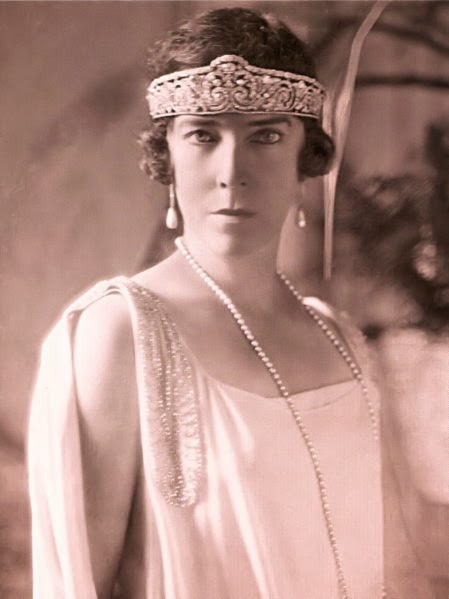
Elisabeth, Queen of the Belgians, in a typical pose for consorts in the early part of the 20th century.  They were usually shown with their families, focusing attention on their role as wife and mother, but their influence was far greater.

Of all the queens of 1914, perhaps Ena of Spain kept most closely to the traditional perception of a consort. Victoria Eugenie Julia Ena was born in Scotland in 1887, the youngest granddaughter of Queen Victoria and one of five of her grandchildren to become a consort.  She had married Alfonso XIII, King of Spain, in 1906 when she was 19 years old and while her reign started and ended with drama, most of it followed the pattern of a typical queen consort's destiny.


Victoria Eugenie, Queen of Spain, in 1922

Within an hour of her wedding, Ena had survived an assassination attempt when a bomb was thrown at the newlyweds' carriage as they made their way to the Royal Palace in Madrid for their reception. In 1931, her time as queen consort came to an end when she was forced to flee into exile with her husband and their children after the establishment of the Second Republic.  The 25 years in between, however, were mostly filled with child bearing and rearing. By the end of 1914, Alfonso and Ena had a family of four sons and two daughters.  Their fourth child, Fernando, had been stillborn.  King Alfonso is said to have resented his wife for being a carrier of haemophilia which was passed on to their first and last sons.  The couple lived largely separate lives and Queen Ena focused on work with charities helping poorer people as well as hospitals and campaigns to improve education for all.  Her role in shaping the family side of the Spanish monarchy was already evident in 1914 though and was much needed - Alfonso had acceded on the day of his birth and the image of the royals had been royal rather than family from that moment.


Queen Ena of Spain only returned to the country once after her exile in 1931 when she stood as godmother to Felipe, son of Juan Carlos and Sofia, after his birth in 1968

In contrast, another of Queen Victoria's granddaughters who was a European queen consort in 1914 had a far more radical and modern role as monarch of her country.  That's perhaps down to the way that Maud became a queen.  Unexpected and unlooked for, her route to queenship was the most modern and unusual of all the women who wore a consort's crown a century ago.


Queen Maud of Norway with her husband and son in a photograph early on in their life as the new Norwegian royal family

Maud Charlotte Mary Victoria was the youngest daughter of Albert Edward, Prince of Wales - later Edward VII.  Born in London in 1869 she married the second son of the heir to the Danish throne when she was 26 and settled down to life on the Sandringham Estate in Norfolk while her husband, Carl, continued his naval career.  Until she was 35 there was little sign of a crown in Maud's life.  And then the country's parliament asked her husband to be king of Norway.


Maud of Wales became a Princess of Denmark and then Queen of Norway after marrying a naval officer with no hope of a crown in 1896.

The decision of Christian Frederik Carl George Valdemar Axel of Denmark to become Haakon VII of Norway, after the proposal was approved by a referendum in the country, led to a huge change in his wife's life that she didn't necessarily relish but which she embraced wholeheartedly.  By 1914, Maud of Wales had been Queen of Norway for nine years and was already a popular figure in her adopted country.  Her only son, now known as Olav, was eleven years old and the king, queen and heir were often seen publicly supporting typical Norwegian activities, like skiing.  But Maud liked the slightly less traditional as well.  Around a year after becoming queen, she lent her support to work to help unmarried mothers set up by feminist Katti Anker Moller and promoted charities concerned with children and animal welfare.  Then there was her enthusiasm for newer technologies, like photography, and her reputation for designing furniture. While Maud's royal blood helped the Norwegian parliament choose her husband as the country's new king, the consort's enthusiastic participation in the country's sporting and cultural life helped cement the new monarchy.  The queen of Norway in 1914 was working endlessly to make the new royal family work.  And succeeding.


The coronation photograph of King Haakon VII and Queen Maud of Norway - a year before it was taken they had no idea they would end up ruling a new monarchy

And making the image of a royal family work was also the task facing the Queen of the Belgians in 1914. But the reputation of her adopted family needed a lot of help - her king, Albert I, had succeeded a grandfather, Leopold II, who had seen scandal and allegations of cruelty attached to his name.  Elisabeth Gabriele Valerie Marie was only the third queen consort of this still new Belgian monarchy but, thanks to her, it found a stability and popularity that were just beginning to take root in 1914.


Queen Elisabeth of the Belgians helped make her adopted country's monarchy into one of the most popular royal families in Europe

She had been born in Bavaria in 1876 and named after that most romantic of 19th century royals, the Empress Elisabeth of Austria, known to her namesake as aunt Sisi. At the age of 24 she married the heir to the throne of the Belgians and their three children were born in the following six years.  Elisabeth's great advantage as a queen consort in 1914 was her experience of ordinary life.  At a time of great social change across Europe, the Belgian queen had knowledge of what working life was like thanks to her father's career in medicine.  And thanks to Elisabeth's time spent helping her father in his work, she also had a better understanding of the problems of getting good healthcare that faced many.


Elisabeth with her only daughter, Marie-Jose, briefly Queen of Italy

Elisabeth and her family's great triumph began in 1914 as World War One dawned.  During the Great War, they lived a life so wound up in the war that they became symbols of their country's fight.  In the Second World War, the now dowager queen helped with the evacuation of Jewish children from her country.  But that was all still to come a century ago.  In the years until 1914, Elisabeth had already displayed a great interest in helping poorer people in her adopted country and in establishing better health care.  Her love of the arts was also already obvious.  Elisabeth's work in changing her country's monarchy was only just beginning in 1914 but the seeds of a successful queenship had already been sewn.  


Elisabeth of the Belgians as a young woman - she would become one of the most popular consorts in the country's history and has given her name to the future queen regnant of the country, the present Duchess of Brabant

An understanding of life outside palace walls also helped the consort of Great Britain to successfully change her dynasty's image and secure foundations for her throne that would be tested far sooner than she could ever have imagined.  Mary, consort of George V, began 1914 as a queen and empress but ended it as a woman determined to lead her family in supporting the war effort in a country just starting on the path of a conflict that would change it forever.


Mary, queen consort of Great Britain, photographed in 1914


By 1914, Victoria Mary Augusta Louise Olga Pauline Claudine Agnes of Teck had been queen consort of Great Britain for four years.  Despite her German title, she had been born in London in 1867 and brought up in Britain before being hand picked as future queen consort by the great queen regnant herself, Victoria.  When her first fiance, Albert Victor, died Mary famously spent some time deciding whether she could marry the new heir in waiting, the future George V, and became his wife in 1893 when she was 26 years old.  By 1914, her destiny as queen had found her and Mary was the consort of her country with five sons and a daughter in her royal nursery.  She had completed a successful tour of India, the country of which she was empress, and was supporting her husband in his role as king. But that devotion to duty shown when she moved seamlessly from prospective wife of one future king to another was about to turn Mary into a royal powerhouse.


Another portrait of Mary of Teck as Queen of England in 1914

Mary and her husband inherited a monarchy that was old fashioned and fashioned by the old.  Victoria's shadow, in her familiar mourning garb, continued to loom large over the British royals thirteen years after her death and the short reign of her eldest son as Edward VII had only served as a last hurrah for the soon to be lost world of aristocratic supremacy.  Mary and George were the heads of a dusty institution that might claim to rule half the world but came from a world that few understood.


George V and Queen Mary in one of their typical serious faced poses


In 1914, all that began to change and the revolution was driven by the consort.  As the First World War began to expand, the queen began to take her family out into the wider world and make sure their fellow citizens knew that they were all in this together.  Mary visited hospitals to comfort injured and dying servicemen and began to trim back budgets at Buckingham Palace.  Perhaps because she had been a poor relation - her parents had several spells of financial difficulties as she was growing up - Mary understood what it was to worry about where the money was going to come from and this helped inform her relationship with those who had those worries.  Her public facing role, begun in earnest in 1914, would irrevocably alter the image of the British royals.


Queen Mary as a young woman - her early life was affected by her parents' financial difficulties and when war hit her country in 1914, the queen began an austerity drive that won popular support

Queen Alexandrine of Denmark would also be called on to redefine the role of royalty in her country but in 1914 the process was still several years away.  But like Mary, Alexandrine took over a monarchy still based around the legend of a legendary 19th century monarch.  The Danish queen's work to bring her crown into the 20th century and out of the shadow of Christian IX was just as integral to her role as consort as Mary's changes from the time of Victoria and the legacy has been just as long lasting.


Queen Alexandrine of Denmark has been her country's consort for two years by 1914

Alexandrine Auguste was born in 1879 in Schwerin, the daughter of the Grand Duke of Mecklenburg-Schwerin.  She married Prince Christian of Denmark in 1898 in Cannes and gave birth to two sons within two years.  She had been Queen of Denmark for two years by 1914 and was already known for her love of gardening and music and the arts.  But Queen Alexandrine's most important role was in supporting her husband as he tussled with the idea of giving up royal powers.  King Christian X wasn't that keen to abandon many of the prerogatives that came with kingship but understood the importance of people power.  Through his reign he would oversee the loss of much of what had made the Danish monarchy important for hundreds of years while rebuilding its role in society.  And Alexandrine was right at his side through all of that.  The couple were just beginning the process in 1914 but their willingness to change and be seen to change revitalised their country's crown.  


King Christian X of Denmark and his consort, Alexandrine

The lack of interest in change defined the early part of the queenship of Sweden's consort of 1914.  Victoria liked the old ways better than the prospect of change but her strong opinions in some ways helped to define opposition to them.  The queen might have dug her heels in but she was wise enough to let them be dug out when popular power demanded it.


Victoria, Queen of Sweden in 1910 when she had been consort of her country for three years

Sophie Marie Viktoria was born in Baden in 1862, the great granddaughter of King Gustaf IV Adolf of Sweden, and she married her distant cousin, Gustaf of Sweden and Norway, in 1881 when she was 24 years old.  The couple quickly had three sons to inherit the double crown that was still to come to their father but by the time Gustaf and Victoria ascended the throne, Norway had separated from the union and they became King and Queen of only Sweden in 1907.  By 1914, Victoria had been consort for seven years and had shown she wasn't going to sit quietly on the sidelines while her husband got on with the job of ruling.


Victoria of Baden with Gustaf of Sweden and Norway early on in their lives together

The Swedish queen was deeply interested in politics and her natural allegiances lay with her German relations.  In 1914 this started to prove problematic as Europe was engulfed by World War One.  The influence of Victoria is often cited as one of the reasons that King Gustaf V was seen as having pro German tendencies through the conflict.  But the years of the war also presented the king with the biggest challenges to the idea of royal powers and by the end of World War One Gustaf had overseen a rapid rise in total democracy.  Victoria's influence in this is debateable as she spent much of her time overseas.  But there is little doubt that the consort was an all pervading figure at the Swedish court in 1914 and that changes would have to get past her before they got into the system.  


Gustaf and Victoria of Sweden - the couple weren't close on a personal level but as a unit of monarchy they functioned together on a widespread scale

The links between another consort and their German relatives also raised questions in 1914 as World War One got underway.  Heinrich of Mecklenburg-Schwerin was the only consort to a queen regnant in the continent in 1914 but his role was perhaps the most marginal after that of Ena of Spain.  He was the uncle of Queen Alexandrine of Denmark - her father, Frederick Francis III, Grand Duke of Mecklenburg-Schwerin, was the (much older) half brother of Heinrich - and like his niece, focused on modern causes in his role as right hand royal to a regnant.


Heinrich of Mecklenburg-Schwerin became Prince Consort of the Netherlands in 1901

By 1914, Heinrich Wladimir Albrecht Ernst had been the consort of the Dutch queen for thirteen years and this era of their marriage didn't prove any luckier for them than earlier or later times.  The couple weren't happy together and, while the remained committed to the upbringing of their only child, they led largely separate existences.  But together their diverse interests helped reshape a monarchy which needed rejuvenation.  While his queen worked on state matters and politics, the consort developed many social causes and became high profile in walking and scouting movements.  This focus on education and activity for younger people was perhaps the most modern cause adopted by Europe's consorts of 1914.  The end of World War One saw a far greater focus than ever before on youth and learning and Prince Heinrich's support for these areas became, in time, forward thinking.


Queen Wilhelmina of the Netherlands and her consort, Heinrich, on their wedding day in The Hague in 1901


Heinrich, like the women who also ruled as consorts, found their traditional role of companion and dynasty founder challenged as Europe headed to the greatest social change it had known in centuries.  The success of these seven consorts in redefining how a royal family should behave - and be seen to be behaving - is just one of the reasons that their countries' crowns are still worn on the continent today.

Wednesday, 7 August 2013

Queens who did the double

Producing one king was on the essentials list when it came to the job spec of a queen consort.  Running a good court, keeping visitors happy, wearing good clothes and encouraging trade were also on the desirable list.  But if you wanted a bonus and a good reference then only delivering a future monarch would do.  And while some queens missed out on motherhood, others filled their royal nursery so successfully that not one but two of their children went on to be crowned.  Seven women have done the royal double in British history.

 
Four kings together - the little boys in the centre became Edward VIII and George VI, the last brothers to be kings of England
 
Cecily Neville has taken centre stage in The White Queen (BBC One, Sundays) again but she was actually the third mother of two kings. 
 
First on the list is that first modern queen of England.  Matilda of Flanders gave birth to four sons and all of them claimed the right to be king of their father's conquered land at one point but only two were acknowledged as such and crowned. In fact it was sons number three and four who got the big job - perhaps the only time in history that two such low born boys have usurped the older siblings so successfully.  William and Henry both ruled England after dad but big brothers Robert and Richard didn't fare so well.  Robert was the first born and always lined up to be Duke of Normandy after William I died but second son Richard expected England to come his way.  Unfortunately for him, he was killed in a hunting accident in the New Forest in the south of daddy's new land before he could inherit.  And that meant the crown went to William who was....killed in a hunting accident in the New Forest but not before he ruled England for 11 years.  Matilda's two boys clocked up 46 years on the throne between them, the longest rule of two brothers in English history.


William Rufus of England was his father's third son and might have expected diddly squit in the will - but the death of an older brother, Richard, led to him becoming King of England form 1087 to 1100
 
 
That powerhouse of medieval womanhood, Eleanor of Aquitaine, was never going to produce just one king.  She had so much royal blood and ambition flowing through her that only multiple monarchs would do.  She, too, saw two older sons lose out on the crown.  Her first born child with second husband, Henry II, was a little boy called William who died aged just three.  They had another son, Henry, but he died six years before his father after several years of rebellion, stoked in part by his mother.  That left son number three, Richard, to take the throne but his ten years of rule ended with his early death in 1199 and his eight years of marriage had failed to produce a child.  Eleanor's fourth son, Geoffrey, was dead by then too so it was son number five, the last of her children, who became King of England against all the odds.  John started life known as Lackland but ended up holding a whole country when he took the crown in 1199.  He was lacking in land again by the end, having lost much of his French territory and a lot of his power to his nobles.  Eleanor's second king proved to be one of the most disastrous monarchs the country has ever known.
 
 
King John was the last of Henry II and Eleanor's  children but somehow ended up monarch
 
And then we come to Cecily.  She, of course, was never queen but came so close to wearing a crown herself that reports of her bitterness towards those who did end up as consort are completely understandable.  Cecily was a looker and a rich one at that and at the age of fourteen she married Richard, Duke of York.  Following the disastrous reign of Henry VI, Richard began pushing for the throne himself and in 1460 was recognized as the heir making Cecily all but queen.  But the Lancastrian win at Wakefield and the death of her husband dashed her hopes of being consort.  Instead, she saw her second son, Edward, become king soon afterwards and hold on to the throne through the bloody battles of the later War of the Roses.  On Edward's death, her youngest son wrestled the throne from his nephews and became Richard III.  Cecily outlived both her kingly boys and died in 1495.
 
 
Cecily Neville, mother of two kings and just months away from being a queen herself
 
After the union of the crowns, the first queen to provide two kings was Henrietta Maria of France.  She married Charles I in 1625 and provided him with four sons.  Her eldest was stillborn and son number two was given the same name as his older brother.  He became Charles II but died without children in 1685 meaning the crown passed to his younger brother, James II.  But James was by then Catholic and the birth of his own legitimate son, James, in 1688 led to him being overthrown.
 
 
Henrietta Maria, Queen of England painted by Anthony Van Dyck.  She was the mother of two kings, the last of them unseated by two daughters whose own mother provided multiple monarchs
 
James' throne was taken by his daughter, Mary, who became the second queen regnant of that name and shared her throne with her husband, William III.  On his death, the crown passed to Mary's sister, Anne.  Mary and Anne were both daughters of James II with Anne Hyde, his first wife whose father was chancellor but who was a commoner.  Pepys said the marriage had undone the kingdom but Anne is the only woman in British history to give birth to two queen regnants.


Anne Hyde with her husband who was at that time James, Duke of York.  With them are their two daughters, Mary and Anne, who would later boot dad off the throne and both end up as queen.
 
Anne's children all predeceased her so that the crown passed to the Hanoverians.  And it was the longest serving of that house's queen consorts who became the mother of two kings.  Charlotte of Mecklenberg-Strelitiz married George III soon after he became king and provided him with fifteen children including nine sons.  The eldest became George IV but he lost his only heir when his daughter, Charlotte, died in childbirth.  The older Charlotte's second son, Frederick, died three years before his big brother and left no children so number three stepped in and became William IV.
 
 
Queen Charlotte had two sons take the throne but between them they ruled England for just 17 years
 
And then we come to the last queen, so far, to provide two kings.  Mary of Teck married George V after her first fiance, the man who was in line to be king, died.  Her eldest son became king on George's death in 1936 but the old monarch's warning, that the Prince of Wales would ruin himself within a year, came true and Edward VIII abdicated just before Christmas that year.  Mary's second son, Albert Frederick Arthur George, became king and ruled as George VI.  The queen saw her granddaughter, Elizabeth, become queen regnant in 1952 and died the following year.
 
 
Mary of Teck.  Almost 900 years after Matilda of Flanders became the first queen consort to be mother of two kings, Mary saw two of her boys take the throne of England.


Monday, 22 July 2013

Royal births on 22 July

Baby Cambridge is on the way.  After months of speculation, Kate and William have reached the really scary part of bringing a baby into the world.  Everyone else is waiting for the happy news while they, well she, sweats her way through the long hours it takes to deliver a child.


The hospital where the royal baby will be born - Kate is now in labour in the Lindo Wing of St Mary's Hospital in Paddington, London
 
 
A first baby can take a long time and as Kate is overdue then that can mean things are going to go very slowly indeed.  But let's hope for Kate there's not too much of a wait and that the little prince or princess of Cambridge arrives today.
 
Monday's child is fair of face - there's a good chance of that with a pretty mum and a handsome dad.  And if Kate and William become parents today their little boy or girl will share a birthday with some other royals in history.
 
 
The royal family, seen here at Trooping the Colour in 2012, is about to grow by another member who will one day take centre stage on the balcony as head of the royal household
 
First of all we have Joan Platagenet later Queen of the Scots.  She was born on July 22nd 1210, the eldest daughter of King John and his queen consort, Isabella of Angouleme.  She already had two big brothers so was never going to be Queen of England but by marrying Alexander II of Scotland she did wear a crown.  She died in Essex in 1238 and pretty soon her brother's regime was waging war on her former husband.
 
 
Joan of England, later Queen of the Scots was a royal baby born on July22nd - baby Cambridge could arrive on the same day with just the 703 year gap
 
 
Another royal birth on this day in 1478 had an impact on the English monarchy and on the lives of six queen consorts.  On July 22nd that year Mary of Burgundy gave birth to a son called Felipe who became the king of Castile.  A young Henry VIII would meet Felipe I, as he was then, when the Spanish king visited the English court and saw in him a role model for a modern ruler.  Henry's determination to rule in the way he saw fit, regardless of what had gone before, was a large factor in his decision to take six wives.  And they became brothers-in-law of a sort.  Felipe married Juana, the sister of Catherine of Aragon, and queen Castile and Leon in her own right.  However, by the time Henry married his first Kate, Felipe was dead and Juana was suffering from serious mental health problems.
 
 
Philip of Castile was a role model for Henry VIII who met him when he visited the English court with his wife, Juana, the sister of Catherine of Aragon
 
 
And there is a very tenuous link to the former royal house of Cambridge.  On July 22nd 1848 the former Princess Augusta of Cambridge gave birth to a son and called him Adolphus.  This princess of Cambridge was the sister of the mother of Queen Consort Mary of Teck.  Adolphus went on to be Duke of Mecklenberg-Strelitz while his little cousin, born 19 years later, wore the consort's crown of England.
 
 
Adolphus Frederick V, Grand Duke of Mecklenberg-Strelitz, and son of Princess Augusta of Cambridge was born on July 22nd 1848.  His cousin became Queen Consort Mary of England and Kate and William's baby will be her great, great, great grandchild.
 
In more modern times, July 22nd 2002 was a happy day for the Danish royal family with the arrival of the second grandchild of Queen Margrethe II.  Prince Joachim and his first wife, Alexandra, welcomed Felix Henrik Veldemar Christian into the world in hospital in Copenhagen.  Felix, whose name means happy, is now eighth in line to the throne of Denmark.


Prince Felix of Denmark arrived on July 22nd 2002 - the last royal birth on that day...until now?
(photo Bill Ebbesen)


Friday, 19 July 2013

The year of the three queens

From Sunday Belgium will have three queens.  Mathilde, Duchess of Brabant will become Queen of the Belgians and assume the consort's role.  Her husband's aunt remains Queen Dowager Fabiola.  And Mathilde's mother in law, Paola, stays as queen though in a role no one else has ever occupied, a kind of retired consort.

 
It's usually three kings at Christmas but in front of this tree are the three queens - Fabiola in blue, Paola in gold and Mathilde in pink
 
It's certainly a record in modern Europe.  And not only will Belgium have three living queens there will also be two living kings - five live monarchs is a pretty impressive haul by anyone's standards.


Albert and Paola are about to make way for Philippe and Mathilde

But it's not the first time that three queen consorts have been alive at the same time.  It has happened in England before but only once and a very long time ago.  And if we really stretch things we could make it four.  But maybe a hattrick should be enough.

In 1200, England had a Queen Eleanor, a Queen Berengaria and a Queen Isabella.  Eleanor had been queen for 46 years, first wearing the English crown in 1154 when her then brand new husband became Henry II.  She played a massive part in his regime to the point, in later years, where she opposed her king's rule and ended up imprisoned as a result. Some historians argue that the division between Henry and Eleanor came about because of his intention to replace her as queen consort after falling in love with Rosamund Clifford.  But Rosamund died in 1176, rumours swirling that Eleanor had poisoned her.  Henry lived another seven years and still relied on his hugely powerful queen to help him.  But he kept her under guard until his death in 1183.


Eleanor was mistress of all she surveyed  and there was no retiring to a back seat when her time as queen consort came to an end
 
The loss of her king turned the prisoner queen from a consort to a dowager but that meant nothing to Eleanor.  Her husband was succeeded by their eldest surviving son, Richard, whose first act was to get mum out of jail.  The new king was unmarried - not that the presence of another queen would have made much difference to Eleanor who set about ruling England for her son while he was away in Europe preparing for the Third Crusade.

And when it was pointed out that every king needs a queen, just as mum sorted out affairs of state she set about tidying up affairs of the heart.  So in 1191 England got a second queen in Berengaria of Navarre.  Rich and pretty, she was a great box office bride for a king who was becoming a bit of a heart throb legend in Europe and her dad was a useful ally for Eleanor and Richard when it came to keeping the southern fringes of their empire intact.


Seeing double....Berengaria of Navarre became queen consort of England in 1191 but still played second fiddle in the queen stakes to dowager Eleanor
 
Berengaria never set foot in England.  She may have been queen consort but with her mother in law as regent and the whole of western Europe at her disposal she preferred the continent to her adopted country.  When her husband was captured and held to ransom on his way back from the Crusade in 1192 she finally saw a role for herself and set about raising money for his release only to find Eleanor one step ahead and already on her way to Germany to negotiate his release.


Richard the Lion Heart was a king with two queensbut there was no doubt which one wielded the most power
 
Richard died unexpectedly in 1199 leaving his throne to his younger brother, John.  Suddenly England had two queen dowagers.  And while King John was good to his mother he wasn't too keen on paying his sister in law the pensions she was owed as a queen dowager of England.  Berengaria fought John for that money for the whole of his reign. 

John had a wife, very briefly, at the beginning of his reign but within a month of becoming king she had been divorced and went very quietly even though hubby kept most of her land and money as well.  Isabelle of Gloucester, sometimes called Hawise, is never recognized as a queen of England but she was the wife of a king for a month of his reign and could technically have laid claim to the title.


No images survive of Isabella of Gloucester, the first wife of John and still his spouse when he became king.  But there are images of him with his mother, Eleanor, who was still queen dowager at the start of his reign. 
 
But she was marital history by 1200 although still alive.  And while Eleanor, queen dowager, still wielded considerable power in John's England she didn't get nearly as much input into his choice of wife.  John needed a queen consort to provide heirs - he had no children with Isabella.  But in this instance, and perhaps for the first time since the Conquest, the king didn't think with his head when choosing a bride.  According to chroniclers of the time, he was overcome with desire for the daughter of the count of Angouleme.  The small matter of this young girl, another Isabella, being engaged to someone else was of no consequence and on August 24th 1200 they married and England got a third queen.


Isabella of Angouleme became consort of England in 1200 - meaning the country had three living queens for the first time in its history
 
 
The hattrick was complete.  And if Isabella of Gloucester is counted then that's four queens alive at one time in the country.  A pretty impressive haul.  Queen Eleanor lived another four years although she retired to the convent at Fontevraud Abbey soon after John's marriage after suffering exhaustion and illness as she sought to keep John on the throne against the claim of her grandson, Arthur of Brittany. 
 
Her death in 1204 brought to an end the era of the three queens.  Berengaria also became a nun and died in 1230 while Isabella, once widowed, married the son of the fiancé she had rejected to become queen of England.  Hubby number two had been engaged to her own daughter at the time of John's death but again Isabella broke all the rules of courtly marriage and very happy she seemed about it too.  England has so far never had three queen consorts at the same time again.
 
 
Eleanor of Aquitaine saw off one queen consort but gave up fighting for power in England when her own grandson besieged her as part of his battle for the crown
 
Another trio of royal ladies all laid claim to the title Queen of England 750 years later but only two were consorts.  When George VI died in 1952 his mother, Queen Mary, was still alive.  She had been dowager queen since 1936 and was now joined in that role by George's widow, Queen Elizabeth, who became known as the Queen Mother.  The third queen was of course his successor, Queen Regnant Elizabeth II.  In the famous photo of the three queens in mourning for their lost king she stands in the background, behind her predecessor's widow and mother.
 
 
King George VI's widow, Queen Elizabeth the Queen Mother, with the king's mother, Queen Mary, and the new Queen Regnant, Elizabeth II

Belgium's triumvirate of female monarchs is another interesting chapter in that rarest of royal tales - the story of the three queens.